
The “Fantasy Salad” Problem
We have all seen it. You look at a fantasy map, and the names are a linguistic mess. On the left, you have “Gorbaz’s Pit” (sounds Orcish). Next to it is “Loth-Lórien” (sounds Elvish). And right below that is “New York City” (sounds… lazy).
This is the “Fantasy Salad”—a map where names have no shared history, culture, or linguistic root. In the real world, place names (toponyms) follow rules. They tell you who lived there, what the land looked like, and who conquered whom.
If you want your world to feel real, you need a Naming System. This guide will teach you how to build a cohesive history for your map, simply by naming your towns correctly.
Too much theory? Generate cohesive town lists instantly with our Zelda Town Name Generator
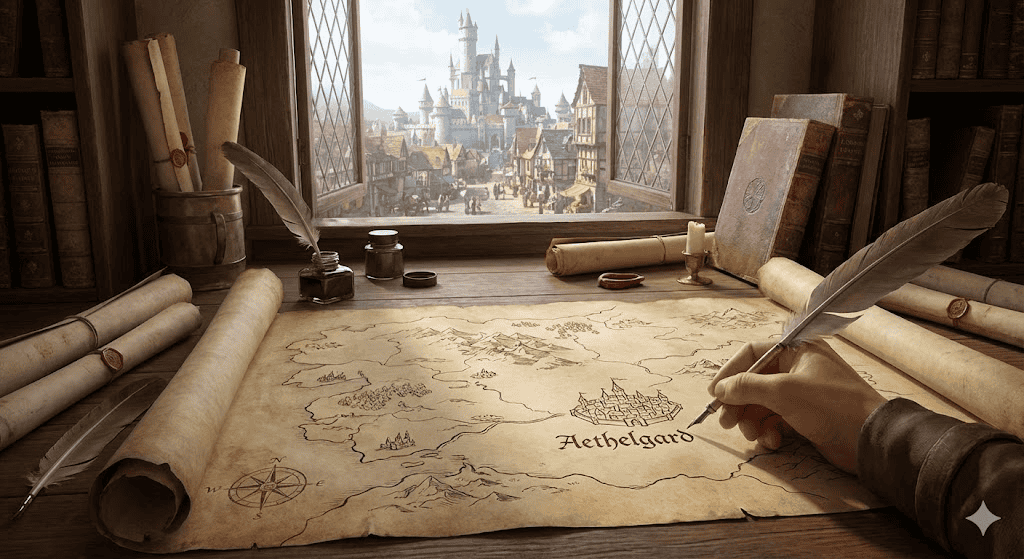
The “What Is It?” Method (Descriptive Naming)
90% of real-world names started as boring descriptions. Ancient people didn’t try to be poetic; they were practical.
- Oxford = A place where Oxen crossed the river (Ford).
- Edinburgh = Edwin’s Fort (Burgh).
- Amsterdam = The Dam on the river Amstel.
How to apply this to Fantasy:
- Identify the Feature: Is the town on a hill? A river? Near a mine?
- Identify the Descriptor: Is the water black? Is the hill windy? Is the mine full of silver?
- Combine Them:
- Black + Water = Blackwater
- Windy + Hill = Windhill
- Silver + Home = Silverhome
Pro Tip: This sounds generic in English (the “Common Tongue”). To make it sound fantasy, you need Linguistic Drift.
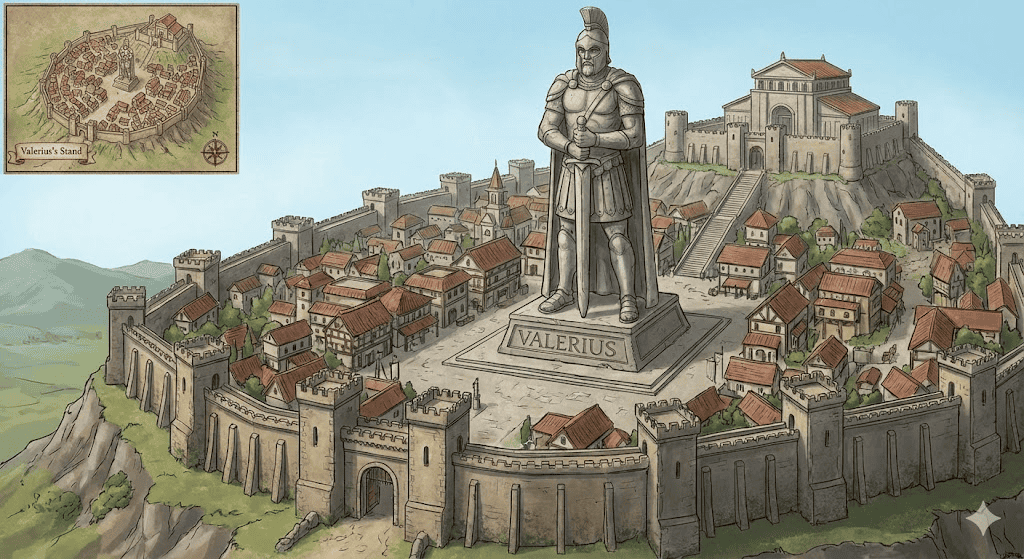
Linguistic Drift & Erosion
Real names get lazy over time. People stop enunciating. “South Hampton” becomes “Southampton.” “Gloucester” is pronounced “Gloster.”
To fake a history for your city, take your Descriptive Name and “erode” it.
The Erosion Cheat Sheet
- Mouth (River mouth) -> Muth / Morth
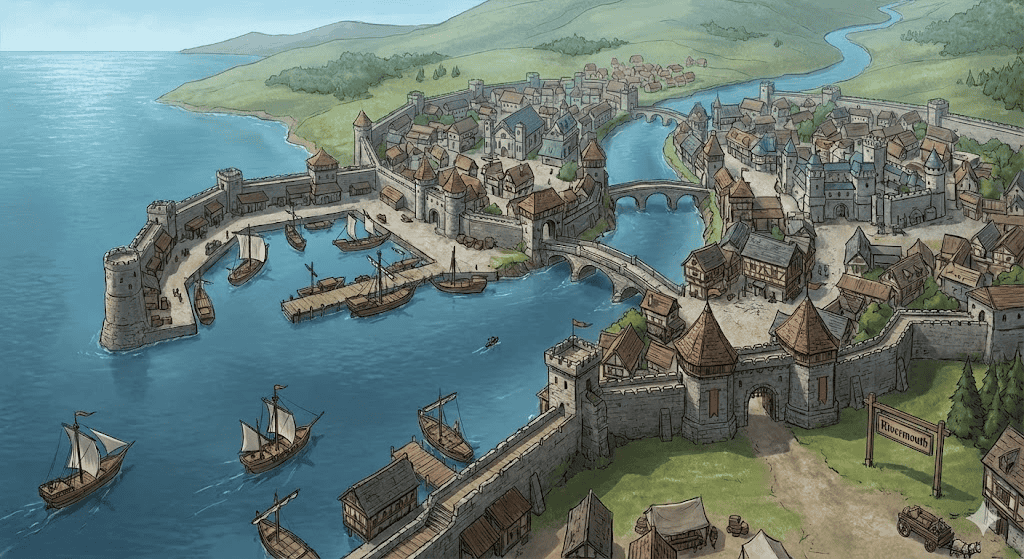
- Rivermouth -> Rivermuth -> Rymuth
- Town (Settlement) -> Ton / Ten / Dun
- Oaktown -> Oakton -> Acton
- Ham (Homestead/Farm) -> Em / Am
- Greenham -> Grennam
- Wick (Market/Trading Post) -> Ich / Ik
- Saltwick -> Saltick -> Zaltic
Example in Action: Let’s name a dwarven city.
- Description: It is a fortress made of Iron Stone.
- Base Name: Iron Stone Fort.
- Translate to “Dwarvish” sounds: Irongard Stein.
- Erode it:Irongardstein -> Ironstein -> Arnstien.
- Result: The city of Arnstien.
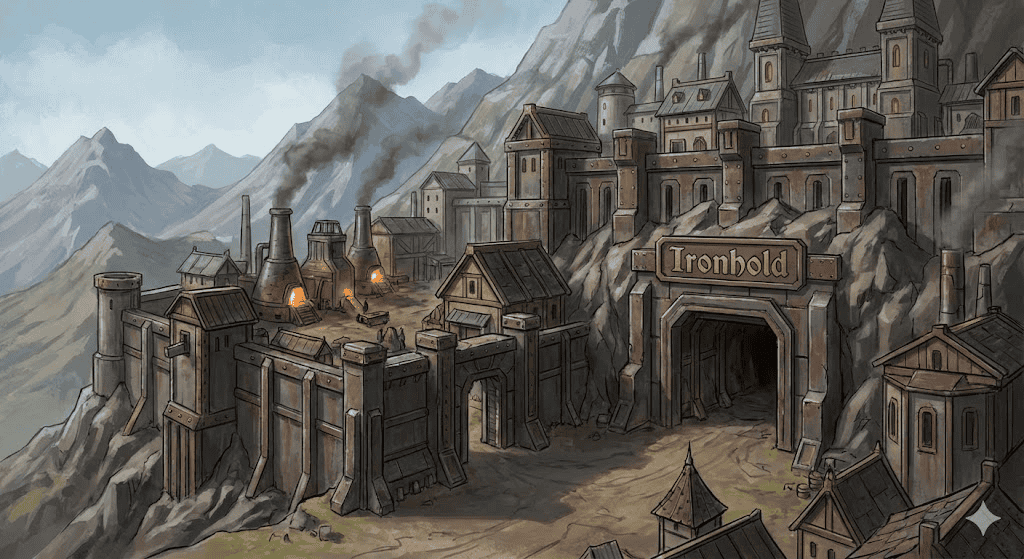
The “Conqueror Layering” Technique
The most realistic maps show layers of history. Usually, an area is inhabited by one culture, then conquered by another, then perhaps a third. Each culture renames places or mispronounces the old names.
The 3-Step History Method:
- The Elders (The First Culture): Name the geographical features (Rivers, Mountains, Forests). These names should sound ancient and elemental (e.g., Elvish or Druidic).
- River Name: “Ael-Drin” (Flowing Blue).
- The Settlers (The Second Culture): Name the towns they build, often incorporating the Elder names but mispronouncing them.
- Town Name: They build a fort on the Ael-Drin. They call it “Aeldrin’s Fort.”
- The Modern Era (The Current Culture): The current map-makers shorten everything.
- Current Map Name: “Aldfort.”
Why this works: It creates depth. The players visit “Aldfort,” and an NPC tells them, “Ah yes, named after the ancient river Ael-Drin.” Suddenly, your world feels ancient.
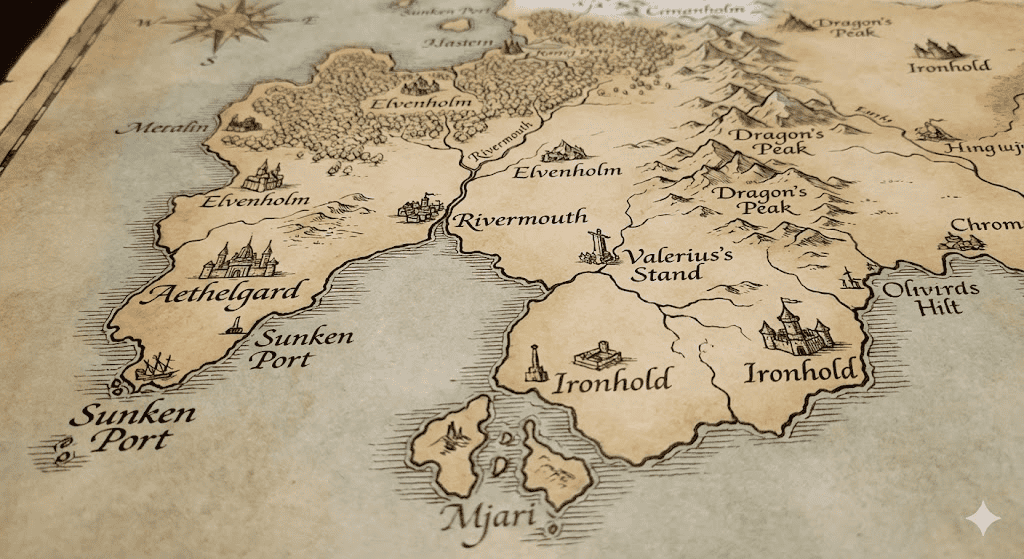
Building Specific Cultural Palettes
To avoid the “Salad,” assign specific sounds to specific regions.
Region A: The Northern Kingdoms (Hard, Guttural)
- Inspiration: Norse, German, Russian.
- Sounds: K, G, R, V, Z.
- Suffixes: -grad, -heim, -stad, -burg, -fjord.
- Generated Examples: Krovgrad, Volheim, Durstad, Zinsburg.
Region B: The Coastal Republics (Flowing, Open)
- Inspiration: Italian, Spanish, Greek.
- Sounds: O, A, L, S, M.
- Suffixes: -os, -ia, -ona, -mar, -port.
- Generated Examples: Valona, Solmar, Essos, Portalia.
Region C: The Ancient Sands (Sharp, Staccato)
- Inspiration: Arabic, Egyptian, Sumerian.
- Sounds: Q, H, Kh, Al-.
- Suffixes: -abad, -ur, -in, -rah.
- Generated Examples: Al-Qarah, Hestur, Zinbad, Khemet.
Need these palettes ready-to-go? Check out our Map Name Generator
Naming The “In-Betweens”
Don’t forget the small stuff. A map with only big cities looks empty. You need:
- Taverns: usually named [Object] & [Object] (e.g., The Rose & Flagon).
- Small Villages: usually named after families (e.g., Miller’s Crossing, Hobb’s End).
- Landmarks: named after events (e.g., King’s Fall, Deadman’s Drop).
The “Board Game” Test
Look at your map. Read the names out loud. Do they sound like they belong in the same board game or book? If you have “Zarthax” next to “Sunnyville,” you have broken the immersion (unless there is a specific lore reason!).
Final Checklist for your Map:
- Do names in the North sound different from the South?
- Are the rivers named differently than the towns?
- Can you trace the “original meaning” of at least 5 cities?
Create your entire world’s geography in minutes. Try the Merfolk City Name Generator